
IRRIGATION / PRACTICAL GUIDES
Why Is My Drip Irrigation Not Working?
By James Thompson
Some links in my articles are affiliate links. I may earn a commission when you buy through them.
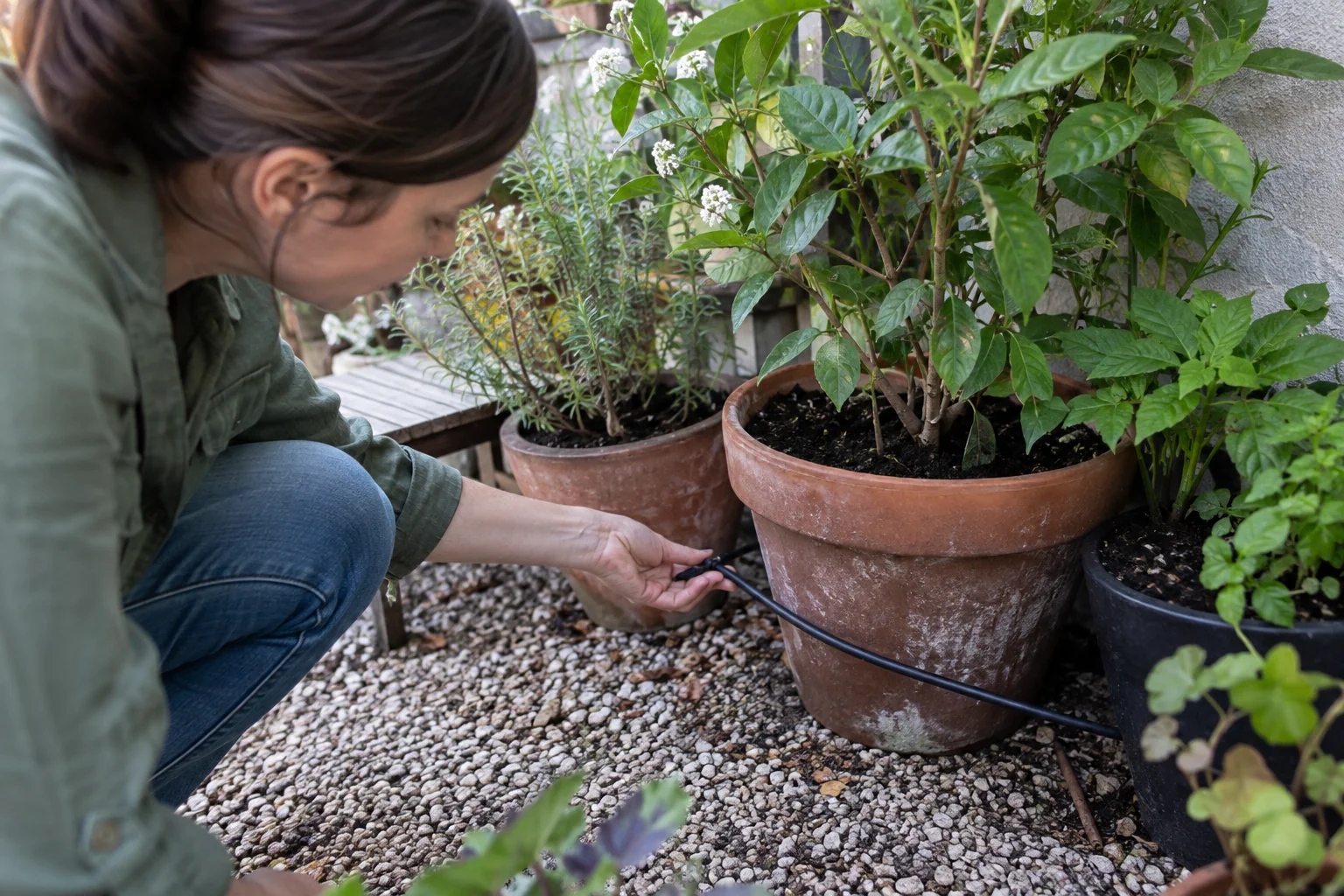
When drip irrigation stops working, first identify the pattern: no outlets watering, one branch weak, or a single emitter dry. That pattern helps you choose the next check. Replacing every dripper or increasing the timer duration can miss an inlet fault and create new problems.
The practical answer
Start with the failure pattern: every outlet, one branch or one emitter. Buy a replacement only after tracing the source, controller, inlet equipment and tube route; otherwise a new dripper can leave the real fault untouched.
Useful product route: Hozelock pressure-compensating drippers or Hozelock 4 mm straight connectors
Which pattern do you see?
Start at the source, controller, supply pipe and inlet equipment.
Trace its tube, bends, local valve and connections.
Check its adjustment and immediate route; service only as permitted.
Start with the whole system
Check that the water source is available and that the tap or reservoir arrangement is operating. Inspect the controller’s displayed mode, batteries where applicable, schedule and any pause setting. Use its instructed manual test rather than assuming a programmed cycle has happened.
If manual operation works but the expected scheduled run does not, investigate the controller setup separately from the tubing. Our watering timer guide explains the difference between common control types.
If all outlets are weak or dry
- Look for a closed valve, crushed supply pipe or kink before the branches.
- Inspect the filter following its cleaning instructions.
- Check that the inlet equipment is fitted in its specified direction.
- Confirm the supply meets the components’ operating requirements.
- Consider whether a recent extension increased demand beyond the design.
Switch off the supply and release pressure before opening fittings. Do not bypass a filter or regulator as a permanent workaround. A regulator reduces pressure rather than creating additional supply pressure.
If only one branch is affected
Trace that branch from its connection to the main line. Check for a pinch under a pot, a sharp bend or a local shut-off valve. Inspect joints for water escaping before it reaches the emitters. Compare the symptoms with another branch of similar length.
If the fault appeared after moving containers, look at the moved section first. If it appeared after extending the route, restore or isolate the new section as instructed and retest. That helps separate a local fault from a capacity problem.
If only one emitter is dry
Check its adjustment and position. Inspect the immediate tube for an obstruction or leak. Service or replace the emitter only in ways permitted for that model. Some emitters are sealed; “self-cleaning” does not mean they are immune to faults.
Do not force a pin through a small outlet. Enlarging a passage can change the delivered flow. Our flushing guide explains the difference between clearing pipework and servicing an emitter.
Record the test result before making another change
Note which outlets worked, which did not and what changed immediately beforehand. Change one thing at a time and compare output using the same timed collection method.
Rain Bird’s maintenance guidance emphasises checking filters, emitter operation and signs of line damage. Use the instructions for your own range to turn those checks into a routine.
For escaping water rather than weak delivery, see how to diagnose leaking connections. If the fault repeats across several branches, review the layout with our irrigation zone guide before ordering more components.
Product examples on Amazon
Compare these examples with your chosen manufacturer’s specifications before ordering. These are individual product examples, not a confirmed compatible bundle.
Hozelock in-line pressure-compensating drippers — view on Amazon
Check the connection size, flow and operating pressure.Hozelock 4 mm straight connectors — view on Amazon
Check compatibility with your micro hose.Hozelock 13 mm supply hose — view on Amazon
Check the pipe specification against your chosen fittings.
Explore all irrigation guides →
Sources
If diagnosis identifies an inlet problem
Compare suitable filters and regulators before replacing equipment →