
IRRIGATION / PRACTICAL GUIDES
How to Plan Irrigation Zones and Extend a Drip System
By James Thompson
Some links in my articles are affiliate links. I may earn a commission when you buy through them.
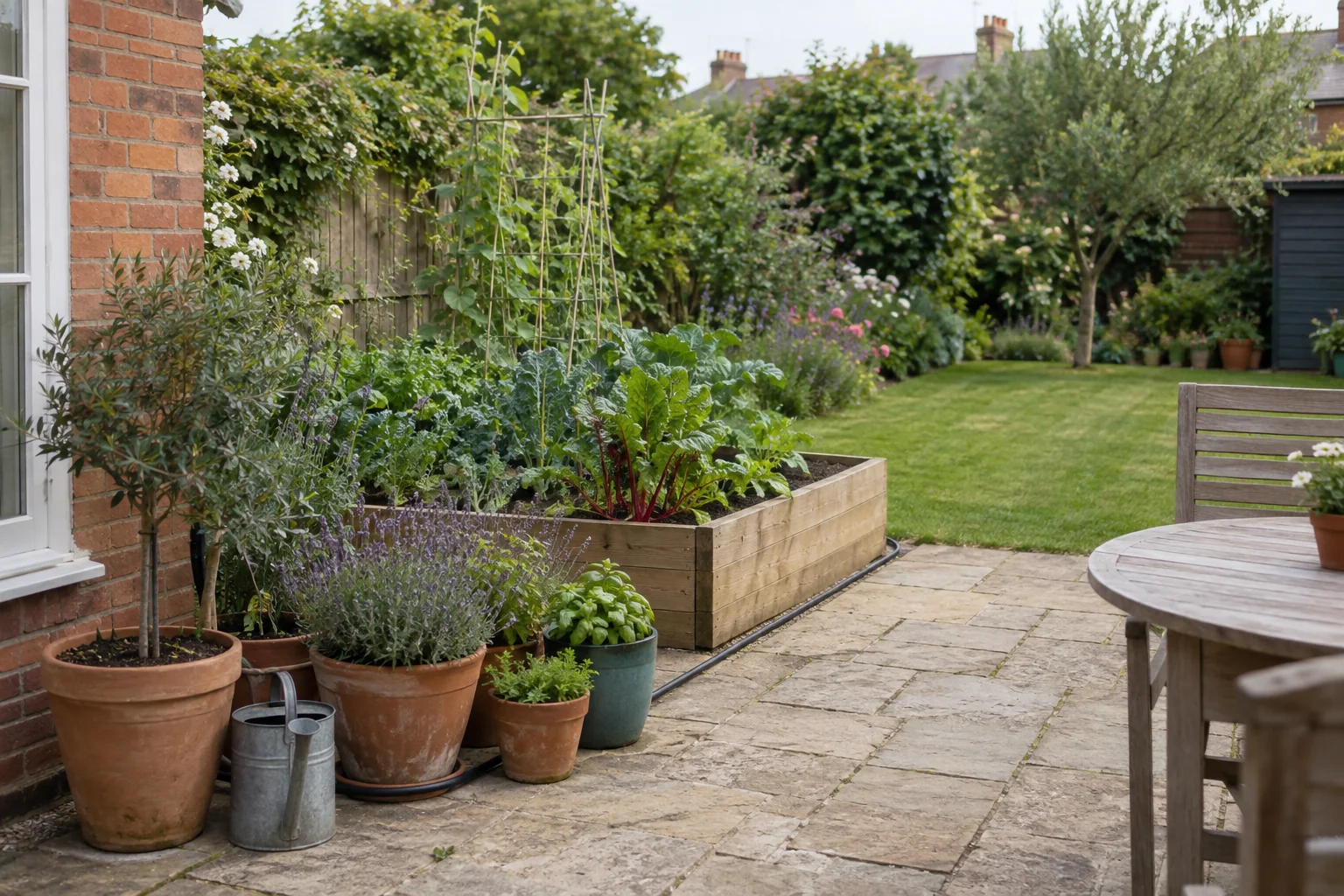
An irrigation zone is a group of watering points controlled together. Plan zones around similar watering needs and the capacity of the equipment supplying them. Extending the pipework physically does not prove that all the added outlets can run effectively at once.
The practical answer
Split zones when areas need different schedules or the combined outlet demand exceeds the permitted supply. Draw the route and calculate simultaneous flow before buying extension pipe and branches.
Useful product route: Hozelock 13 mm supply hose or Hozelock 4 mm T-piece connectors
Separate plant needs from pipe routing
Start with a list of areas: patio pots, greenhouse containers, vegetable beds and established borders, for example. Ask which need similar watering durations and which are exposed to rain or different temperatures. Nearby areas do not necessarily belong on the same schedule.
Draw the water route afterwards. This prevents a convenient pipe connection from deciding the watering routine for plants with very different requirements.
Calculate the planned demand
Add the rated flow of the emitters you intend to run simultaneously. Compare it with the permitted flow range of the inlet equipment and the supply available under operating conditions. Include existing outlets as well as the extension.
Use our flow and water-use calculation guide for the arithmetic. Remember that supply pressure and flow are different measurements; a strong-looking tap alone is not a capacity calculation.
Check the pipework limits
- Total supply-pipe length and its specified diameter.
- Length and demand of each micro-tube branch.
- Changes in elevation between inlet and emitters.
- Maximum outlets or runs allowed for the selected range.
- Connections needed at the branch and line ends.
Hozelock describes its micro hose as feeding individual watering components from the supply line. Its T-piece provides a physical branch connection. Neither statement gives unlimited capacity to every branched layout.
A branch is not automatically a separately timed zone
A T-piece can divide a route, but without suitable control both sides receive water when the shared supply runs. Separate timing needs appropriate valves, a multi-outlet controller or another approved control arrangement.
A small manual valve may help isolate a branch, but only provides the control described in its instructions. Do not assume it creates independent automatic scheduling. See how to choose a watering timer when comparing control options.
A branch and a controlled zone differ
Both sides receive water when the shared supply runs.
Independent timing requires suitable approved valves or controller arrangements.
Extend in a way you can test
Record the original layout and output first. Install the extension with compatible fittings, protecting open tube from dirt. Flush where instructed, then compare representative old and new outlets during the same test run.
If output at the far end drops after the extension, investigate combined demand, pipe limits, kinks and leaks. Do not immediately increase runtime: that may overwater the points that still receive their original flow.
Keep the layout understandable
Label controlled areas and retain their settings, component references and maintenance access points. Our raised-bed layout guide and container irrigation guide show how different areas can need different arrangements.
Leave room for expansion in the plan, then verify each addition. A system designed and recorded in stages is easier to maintain than a collection of unlabelled branches added whenever another pot arrives.
Product examples on Amazon
Compare these examples with your chosen manufacturer’s specifications before ordering. These are individual product examples, not a confirmed compatible bundle.
Hozelock 13 mm supply hose — view on Amazon
Check the pipe specification against your chosen fittings.Hozelock 4 mm T-piece connectors — view on Amazon
Check compatibility with your micro hose.Hozelock 4 mm straight connectors — view on Amazon
Check compatibility with your micro hose.
Explore all irrigation guides →
Sources
Choose controls for your zones
Compare garden watering timers and independent schedule options →