
Garden watering · Practical guide
Watering a Newly Planted Tree: Check the Root Zone, Not the Calendar
Some links in my articles are affiliate links. I may earn a commission when you buy through them.
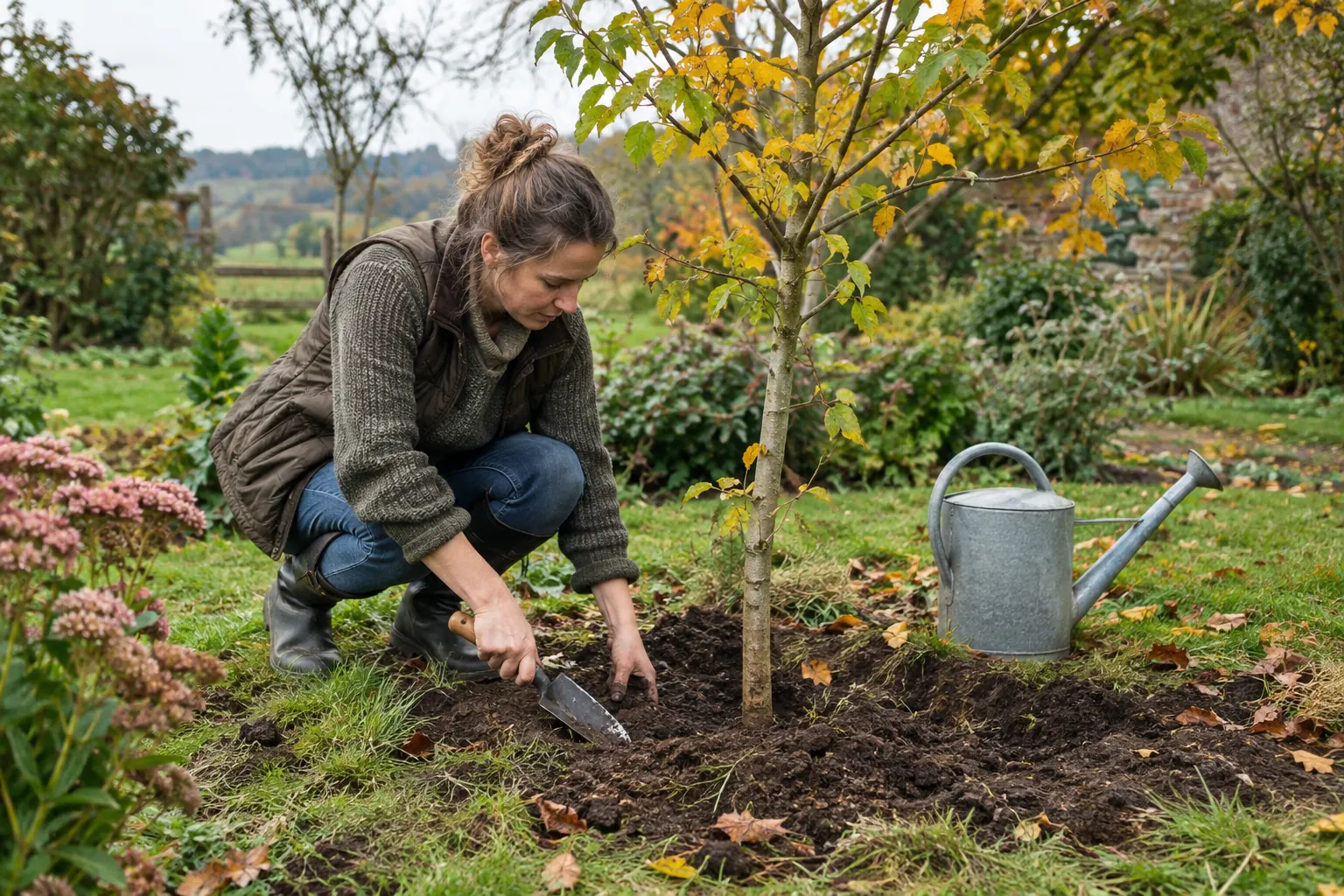
A new tree can stand in damp-looking soil while its compact rootball is dry. It can also wilt when the planting hole is saturated and roots lack air. A calendar or fixed timer cannot tell these situations apart. Use a trowel and a few repeatable observations before deciding whether to water.
The practical answer
Water the rootball slowly only when checks show it is drying. A porous hose can spread water around a planted area, but supervise the first runs and confirm the wetted depth rather than leaving it against the trunk.
Useful product route: GARDENA 15 m soaker hose
Inspect where the roots actually are
The RHS establishment advice identifies insufficient watering in the first two years as a leading cause of poor establishment, but also warns that overwatering is harmful. Gently check soil at the edge of the rootball and just beyond it, without cutting important roots. Surface moisture alone is misleading. Record what you find after rainfall and again before the next planned watering.
The RHS watering guide advises slow watering around the rootball in dry spells, aiming to moisten soil 20–30 cm deep. That is a check on outcome, not a universal number of minutes for a timer. Soil texture, tree size, wind, slope and existing rainfall change the amount needed.
Place the water where it can help
For a hose or watering can, apply water gently around the planted root area rather than against the trunk. For a drip system, first confirm the chosen emitter and tubing are suitable for the supply, then test the wetted area under supervision. A single outlet can produce a small wet spot while much of the rootball remains dry. Move outlets or change the layout only after checking actual wetting; follow our dripper output test to confirm delivery separately from soil penetration.
Keep connectors accessible and avoid securing tubing against bark. As roots grow outward, revisit the layout rather than assuming the initial ring remains correct. Our component guide explains the roles of supply pipe, branches and drippers.
Rainfall may miss the tree
Canopies, walls and eaves create rain shadows. The RHS specifically notes that plants beside walls or under trees may need watering despite rainfall. Check below the surface before overriding a scheduled cycle. Conversely, puddling after a run or rain is a reason to inspect drainage, not to lengthen watering.
Keep weeds and turf from competing close to the tree; RHS establishment guidance recommends a vegetation-free circle. Mulch can help retain moisture, but keep it clear of the stem and use our under-mulch access guide if tubing is covered. Recheck in dry weather through the first growing seasons, with extra attention to large specimens. These observations are more useful than promising one fixed volume for every newly planted tree.