
Irrigation / Component basics
Drip irrigation components explained.
By James Thompson · Researched guide
Some links in my articles are affiliate links. I may earn a commission when you buy through them.
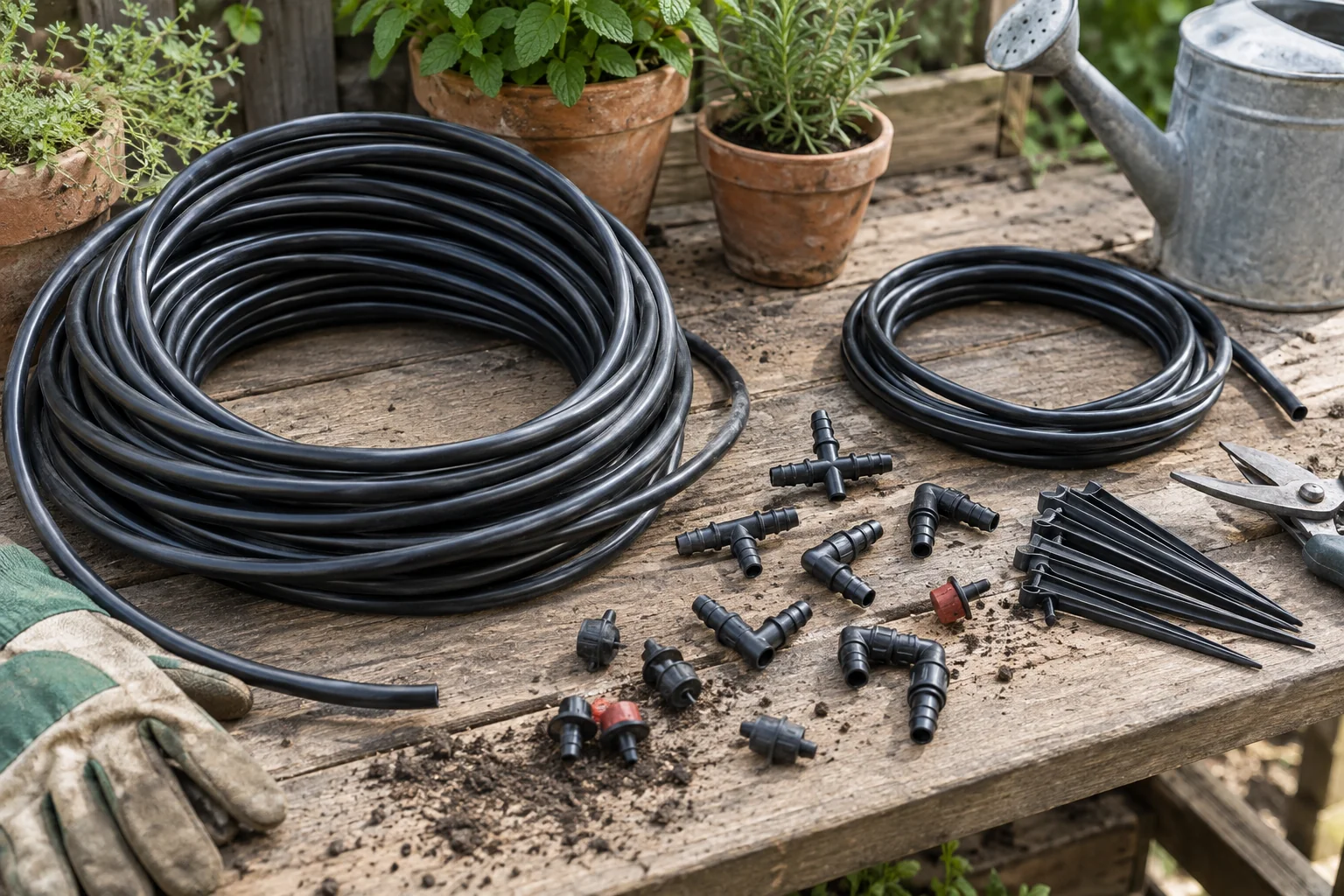
A drip system is a connected set of components that carries water from a supply to individual watering points. Understanding each part helps you build a useful shopping list before choosing a brand or kit.
The basic route through a system
Think in terms of water source, system inlet, distribution pipe and watering points. A timer may automate the supply, while filtration and pressure management depend on the equipment and water source. The exact order and required parts should follow the chosen manufacturer’s instructions.
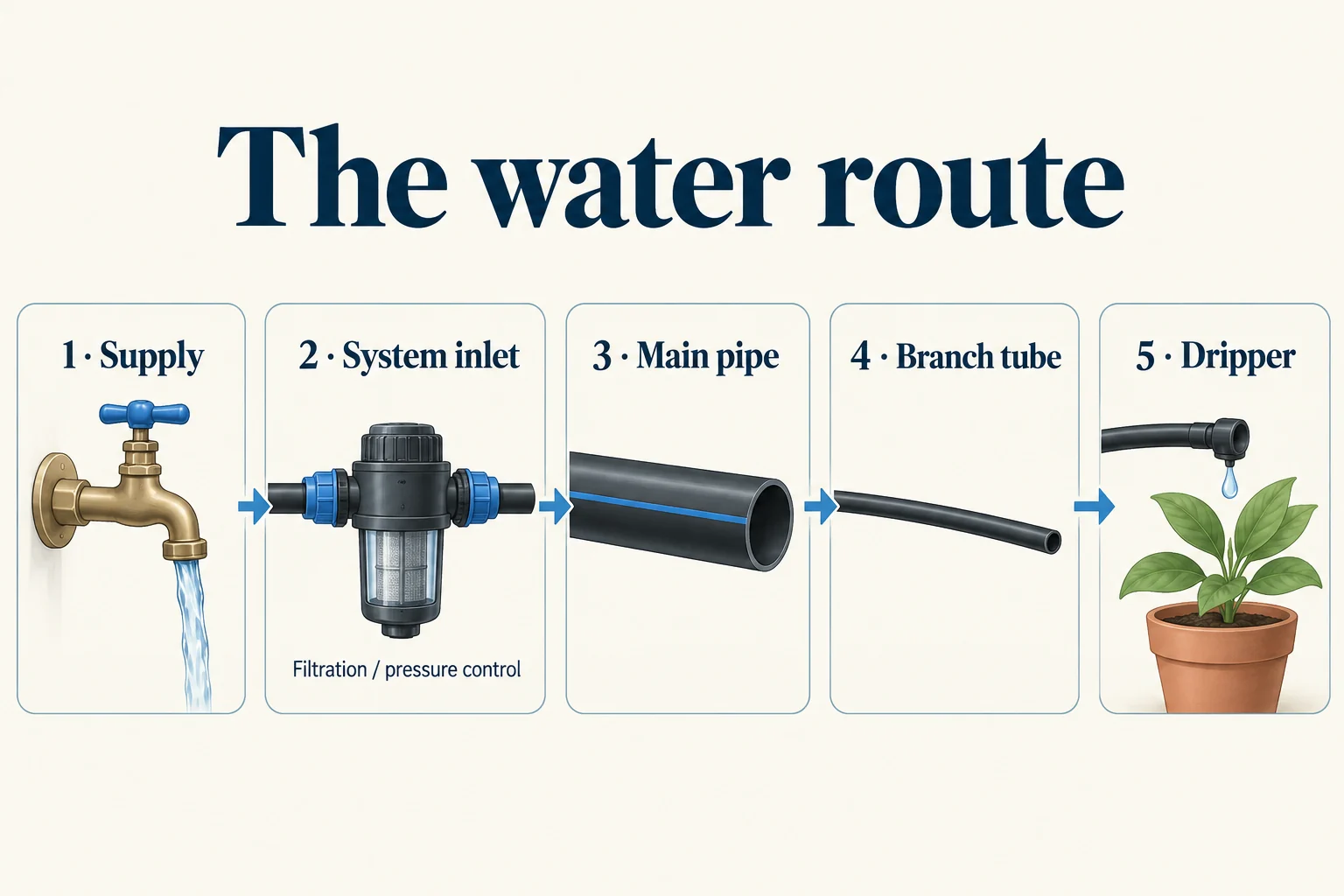
What the main components do
| Component | Purpose | Check before buying |
|---|---|---|
| Inlet or tap adaptor | Connects the water supply to the system. | Thread type, size and connection method. |
| Filter | Helps keep debris out of small waterways. | Required filtration specification and cleaning access. |
| Pressure regulator | Reduces inlet pressure to suit the selected system. | Required outlet pressure and permitted inlet range. |
| Supply pipe | Carries water along the main route. | Actual dimensions, suitable fittings and layout limits. |
| Branch tubing | Connects individual watering points where the system uses branches. | Compatible connectors and maximum branch length. |
| Emitters or drippers | Deliver water at specific points. | Flow rating, operating pressure and placement. |
| Connectors and end fittings | Join, branch or close the pipework. | Compatible pipe and connection design. |
| Timer or controller | Controls watering periods. | Water-source compatibility, power and operating limits. |
A regulator is a specification choice
Do not assume every drip system uses the same pressure. As one specific example, GARDENA describes its Master Unit 1000 as reducing pressure to about 1.5 bar for its Micro-Drip-System. That is a product-specific requirement, not a universal target for all irrigation equipment.
Emitters and dripline are different choices
Individual emitters allow watering points to be placed where needed. Dripline has integrated watering points along its length. Select the approach that fits the planting arrangement, then check the manufacturer’s flow, spacing and run-length guidance.
Pressure-compensating emitters are designed to manage flow variation within a specified operating range. They still need an appropriate supply. Hozelock’s Pinch Drip pressure-compensating dripper, for example, is specified for end-of-line use on 4 mm micro tubes or inline use on 13 mm supply tubes.
Individual drippers
Separate watering points placed where your plants need them. This sketch shows drippers on branch tubes; supported connections vary by system.
Dripline
Watering points integrated along the pipe. Check emitter spacing and flow before choosing a line for your planting layout.
Conceptual sketches; not to scale.
Turn the layout into a component list
- Identify the water source and its available pressure and flow.
- Sketch the route and measure the distances.
- Mark each watering point or proposed dripline section.
- Check the system’s permitted lengths, emitter count and pressure limits.
- List connectors, branches, end fittings and securing parts.
- Include required filtration and pressure-management parts.
Before purchasing
For the next step, read our pipe sizes and fittings guide, or use the greenhouse planning example.
Examples of irrigation components on Amazon
These product examples on Amazon UK can help you compare components. They are not a complete compatible shopping list.
-
Hozelock 13 mm supply hose — view on Amazon
Compare the supply-pipe specification with the fittings you plan to use. -
Hozelock in-line pressure-compensating drippers — view on Amazon
Check the connection size, rated flow and permitted pressure for your system. -
Hozelock Sensor Controller Plus — view on Amazon
Check the tap connection, pressure requirements and whether light-based watering suits your location. -
Hozelock 13 mm end plugs — view on Amazon
Select end fittings for the exact supply pipe you are using. -
Hozelock hose punch — view on Amazon
An installation-tool example for the manufacturer’s 13 mm hose; follow its instructions.
Check the exact model, included parts, seller and current specifications on the retailer’s listing and the manufacturer’s instructions. Parts from different ranges are not automatically interchangeable; a kit may already include some of them.