
Garden watering · Practical guide
Drip Irrigation on Slopes: Uneven Flow, Runoff and Drainage
Some links in my articles are affiliate links. I may earn a commission when you buy through them.
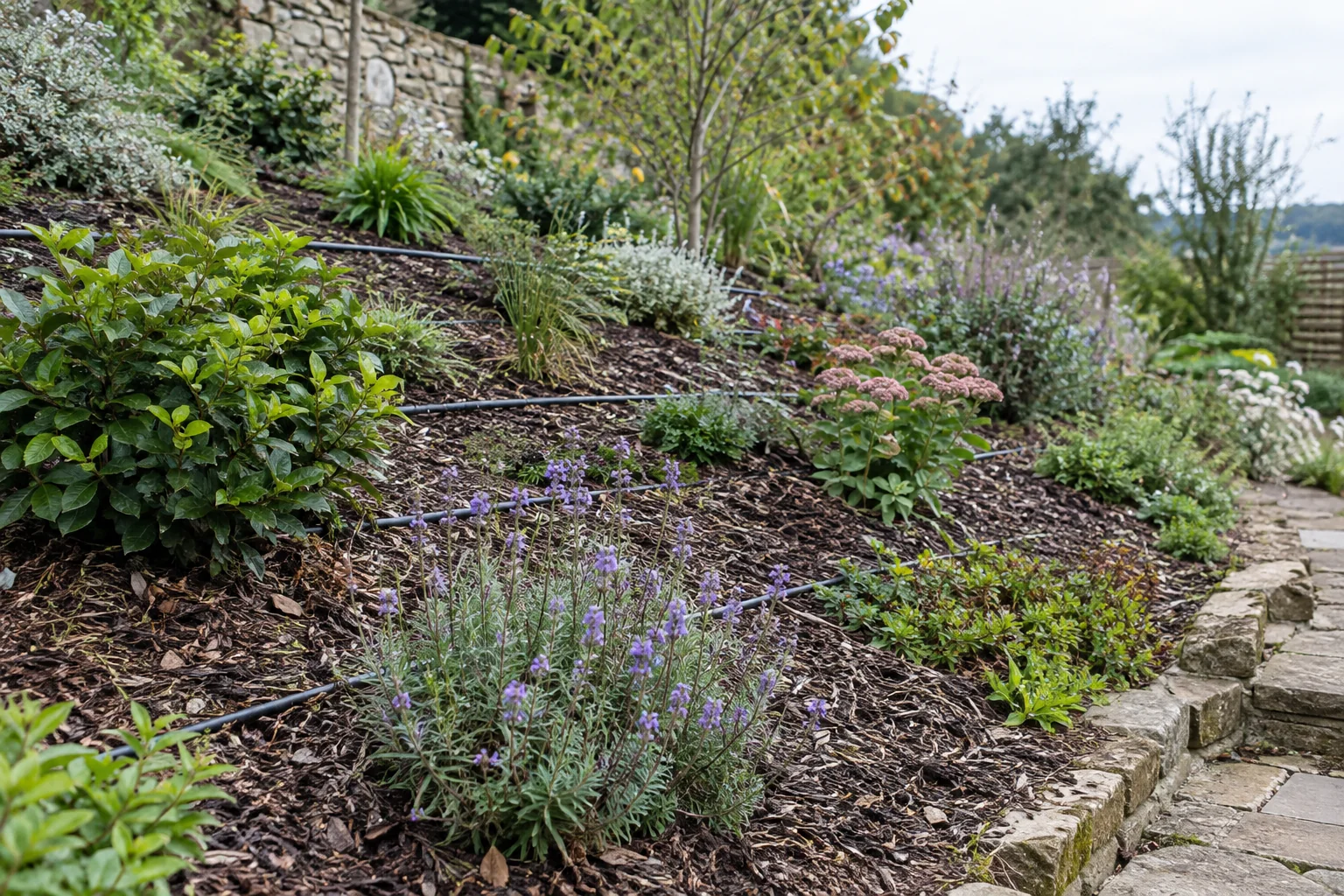
A wet patch at the bottom of a sloping garden can have several causes. Water may run over the soil while irrigation is on, lower outlets may deliver differently, or water left inside the pipe may drain downhill after shutdown. Each calls for a different check.
The practical answer
Lay manageable lateral runs across the slope where the selected system permits it, separate unlike elevations when necessary and diagnose post-run drainage before changing emitters. Pressure-compensating drippers are worth comparing only within their stated operating range.
Useful product route: Hozelock pressure-compensating drippers
Identify when the problem happens
| Observation | Possible cause | First check |
|---|---|---|
| Unequal collected output during a run | Pressure, blockage or outlet differences | Compare outlets at upper, middle and lower positions |
| Water travels over the soil while running | Delivery exceeds local infiltration | Watch where water starts pooling and moving |
| Lowest outlets continue draining after shutoff | Water retained in higher pipework drains down | Observe the line immediately after the supply closes |
This is a diagnosis aid, not proof of a single cause. A leaking connection can also create a wet patch. Start with the checks in our troubleshooting guide if the symptom occurs on flat ground too.
Map height as well as distance
A shopping list based only on pipe length misses the vertical change. Sketch the supply point, upper and lower planting areas and approximate difference in height. Record whether the line climbs before it descends. Consult the selected manufacturer’s permitted pressure range, line length, emitter spacing and elevation limits.
Rain Bird’s slope advice explains the importance of contour layouts and separating areas with different watering needs. Much of that page concerns sprinklers; its sprinkler spacing examples should not be transferred to a garden drip kit. For drip planning, seek the specific dripline layout instructions and arrange manageable sections across the slope where those instructions permit.
Pressure compensation and check valves do different jobs
Pressure-compensating emitters aim to keep flow more consistent within their specified working pressure range. That label alone does not establish that an outlet holds water back when the supply closes. Check the separate specification for a built-in check valve or drainage-prevention function.
Rain Bird explains low-head drainage as water remaining in pipework travelling to lower outlets after shutdown. Products with check valves have stated hold-back limits. Select using the actual elevation difference and product documentation; do not assume every check-valve emitter has the same rating. This feature is also separate from the backflow protection required at a mains-water connection.
Our dripper comparison explains operating-flow choices. If different planting areas need independent schedules, use the zone-planning guide.
Commission under supervision
Compare upper, middle and lower outlets using the same catch-test duration. Then inspect the soil around those locations. If runoff develops, stop rather than allowing it to reach a path or boundary. Where the controller permits, shorter watering cycles separated by a pause may help infiltration, but set the timings from observation and plant requirements, not a universal slope formula.
Finally, close the supply and observe the low points. Persistent wetness after every shutdown deserves a product-specific drainage review. Large height changes, erosion, retaining structures or water moving towards buildings justify advice from an irrigation designer before extending the system.
Sources checked 18 September 2026. Planning and inspection sequences are Mersey Direct editorial guidance, not claims of physical product testing.