
IRRIGATION / PRACTICAL GUIDES
How to Fix Leaking Drip Irrigation Connections
By James Thompson
Some links in my articles are affiliate links. I may earn a commission when you buy through them.
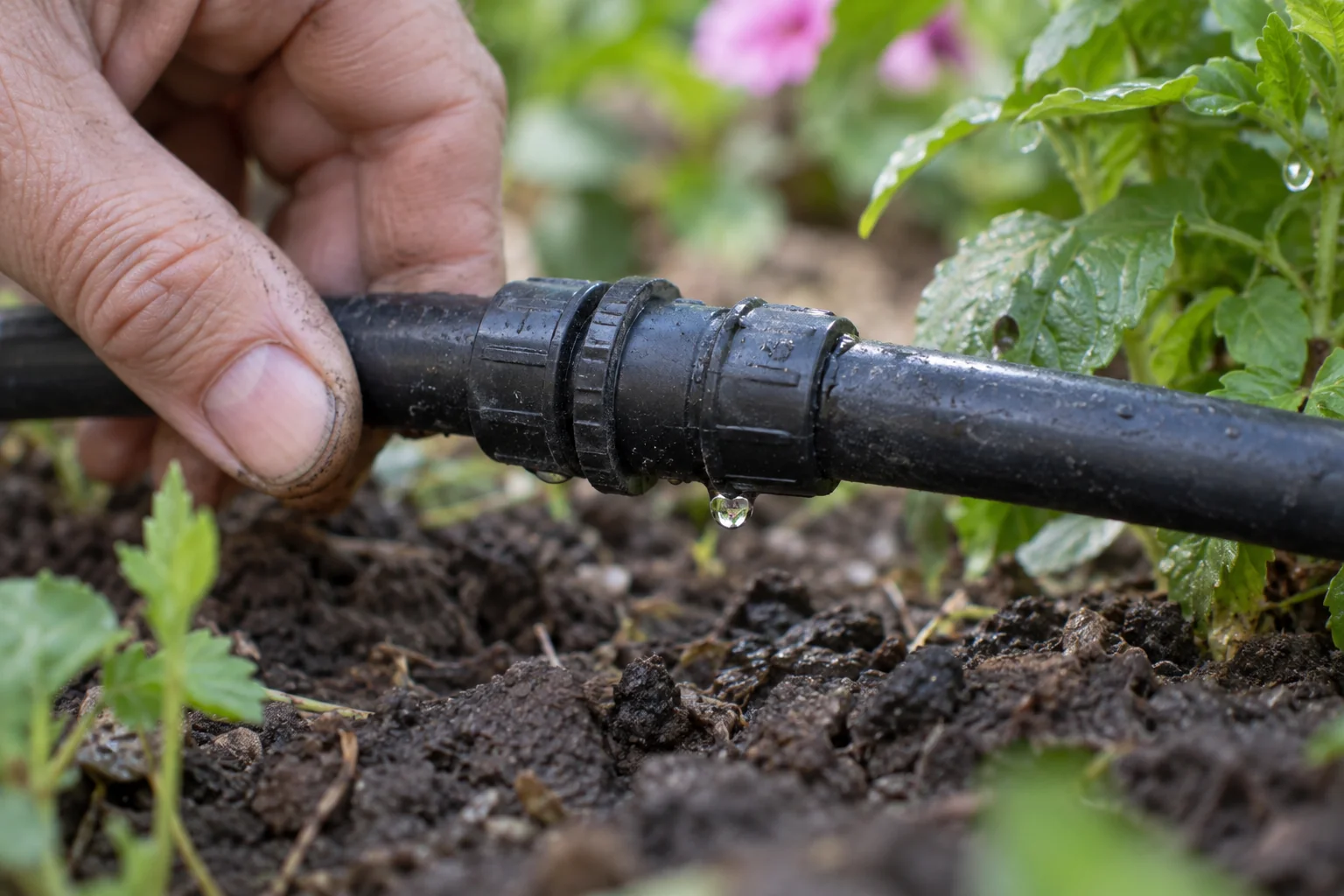
A leaking drip-irrigation connection is worth diagnosing before replacing parts. The leak may be at a pipe joint, a pierced outlet, a pipe end or the tap connection, and each location can require a different repair.
The practical answer
Locate the first point that becomes wet, turn the supply off and repair that connection with parts from the same pipe family. Do not enlarge a hole or add sealant until the manufacturer’s repair method calls for it.
Useful product route: Hozelock 4 mm straight connectors, Hozelock 13 mm end plugs or Hozelock hose punch
Locate the actual source
Observe the system while it runs and trace the first wet point. Water can travel along tubing, making the lowest drip appear to be the source. Distinguish normal emitter discharge from water escaping around its mounting point.
Turn off the supply and release pressure before dismantling anything. Follow the manufacturer’s procedure, particularly where controllers, pumps or pressurised inlet equipment are involved.
Find → isolate → inspect → retest
Check the joint before buying a replacement
- Confirm that the tubing and fitting belong to a compatible range.
- Look for an incomplete insertion or incorrectly assembled retaining parts.
- Inspect the pipe end for splits, flattening or damage.
- Check any removable seal according to the connector instructions.
- Look for strain from a tight bend or unsupported tubing pulling on the joint.
Use our tubing measurement guide if the pipe identity is uncertain. For a threaded adaptor, identify the thread and sealing method separately; a tube-size measurement will not answer that question.
A pierced hole needs the correct fitting
Some systems use a dedicated punch to form openings in supply pipe. Hozelock specifies a hose punch for its compatible supply-tube installation. A random drill bit or oversized puncture should not be assumed to produce the required opening.
For an unused hole, choose the manufacturer’s specified blanking plug. Hozelock lists blanking plugs for holes in its 13 mm supply tube. A pipe-end plug serves a different location, so do not buy one simply because both products are called plugs.
Repair within the system instructions
If the manufacturer permits it, an undamaged pipe end may be reconnected after making the specified cut. Check that removing a damaged section leaves enough slack and does not create strain. Where a connector or seal is damaged, replace it with the identified compatible part.
Avoid relying on tape or glue as a universal repair. Barbed, compression, proprietary and threaded joints use different sealing arrangements. If the manufacturer does not approve a repair method, seek advice rather than improvising.
Retest the complete system
Restore the supply gradually as instructed, inspect the repaired connection and check nearby outlets. If several joints begin leaking, investigate compatibility, assembly and pressure requirements before replacing them individually. A regulator’s correct specification matters to the whole system.
Record the part replaced and the cause you identified. Recheck after the next watering cycle so a temporary improvement is not mistaken for a completed repair.
Product examples on Amazon
Compare these examples with your chosen manufacturer’s specifications before ordering. These are individual product examples, not a confirmed compatible bundle.
Hozelock 4 mm straight connectors — view on Amazon
A joining-fitting example for compatible micro hose.Hozelock 13 mm end plugs — view on Amazon
Select end fittings for the exact supply pipe you are using.Hozelock hose punch — view on Amazon
An installation-tool example for the manufacturer’s 13 mm hose; follow its instructions.
Explore all irrigation guides →
Sources
If a fitting needs replacing
Check compatible tubing and fittings before buying replacements →