
Garden watering · Practical guide
Drip Watering for Hanging Baskets: Placement, Runoff and Checks
Some links in my articles are affiliate links. I may earn a commission when you buy through them.
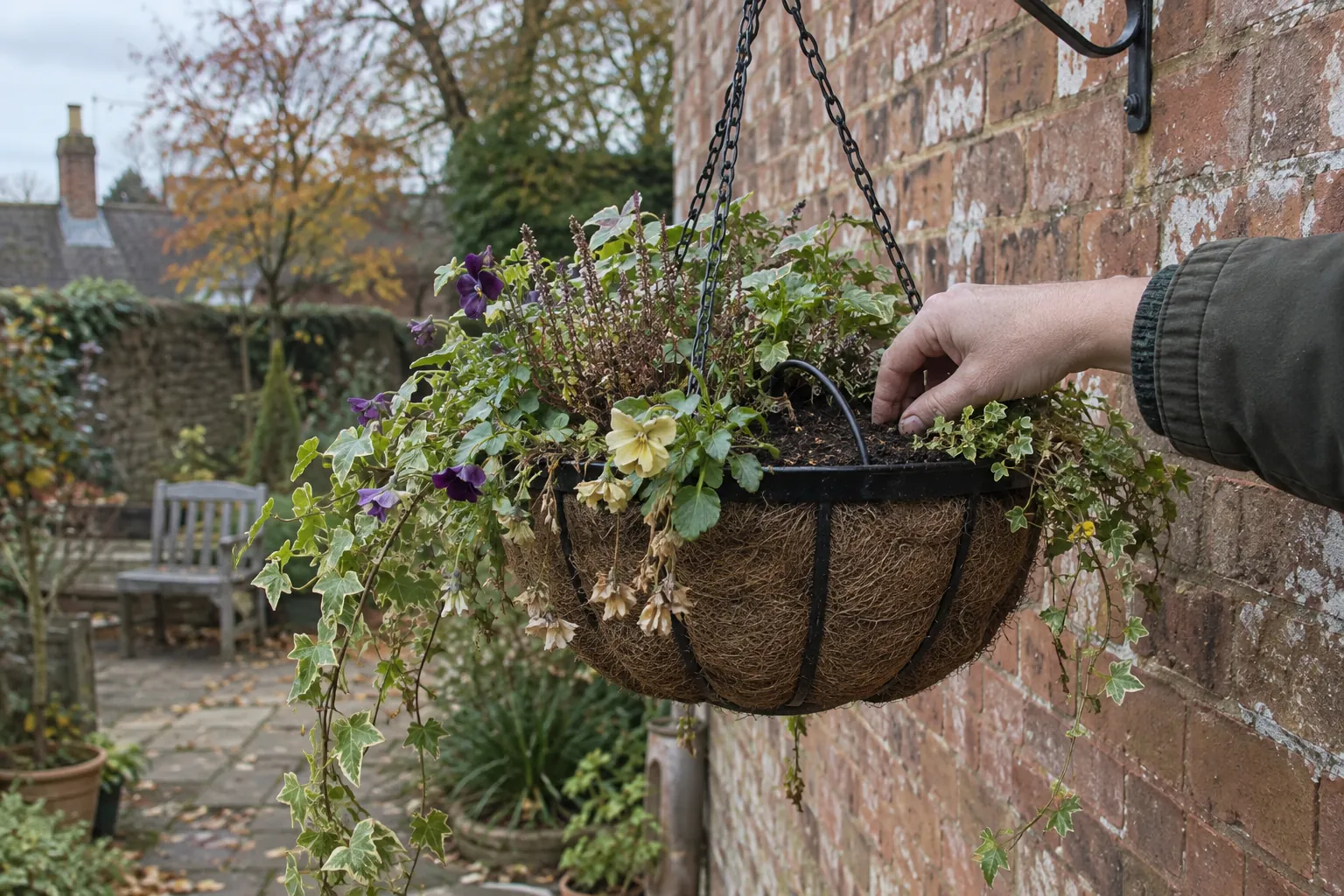
A hanging basket is a small, exposed root space. Wind and warm weather can dry it quickly, yet a timer can also run when the compost is already moist. Adding a microtube or dripper helps only if its outlet wets the compost, the basket drains and you can still inspect it.
The practical answer
Use a basket system only after a manual watering test shows where the compost dries. For a group of baskets or containers, start with a complete kit; use pressure-compensating drippers only where the pipe range and operating pressure match.
Useful product route: Hozelock 20-pot drip-watering kit or Hozelock pressure-compensating drippers
Start with a manual baseline
The RHS hanging-basket guide recommends checking baskets daily in summer, watering unless compost is already moist. It suggests gauging weight by gently lifting or nudging the basket. In winter, baskets still need checking, but compost should be moist rather than soggy. Note how quickly your particular basket dries after a thorough manual watering before setting a timer.
A RHS-supported container experiment found that bedding plants could grow well without water dripping from the container after each application. Those trial amounts for particular plants are not a universal basket prescription. Visible runoff is useful evidence to inspect, not a target for every cycle.
Route the tube safely
Use fittings compatible with your chosen supply tube and controller; our pipe and fitting guide helps compare the connection types. Secure microtubing so it cannot pull out of the basket or snag the hanger, without pinching it or obstructing access. Aim an outlet into compost near the root area, then supervise several short tests. Inspect both the top and a deeper point, because a wet surface may hide a dry pocket. Check water has not been directed onto masonry or a path below.
Never assume one emitter flow or runtime suits all basket sizes. Measure actual delivery with our catch test, then observe the basket’s moisture and drainage. A basket that has dried severely can be difficult to rewet; RHS advises adding water slowly so it seeps in. Restore moisture manually under supervision before relying on an automated schedule.
Change the schedule with conditions
Warmer, windy days and a larger plant canopy can increase demand. Autumn and winter may require far less added water, but sheltered baskets may receive little rain. Check the compost, not only the forecast or a rain sensor. If a basket shares a zone with large patio pots, their demands may differ; use the zones guide to decide whether separate control is sensible. Inspect tube routing, outlet blockage and the hanger regularly.