
Water-Butt Diverters: Match the Downpipe Before Buying a Filter
Some links in my articles are affiliate links. I may earn a commission when you buy through them.
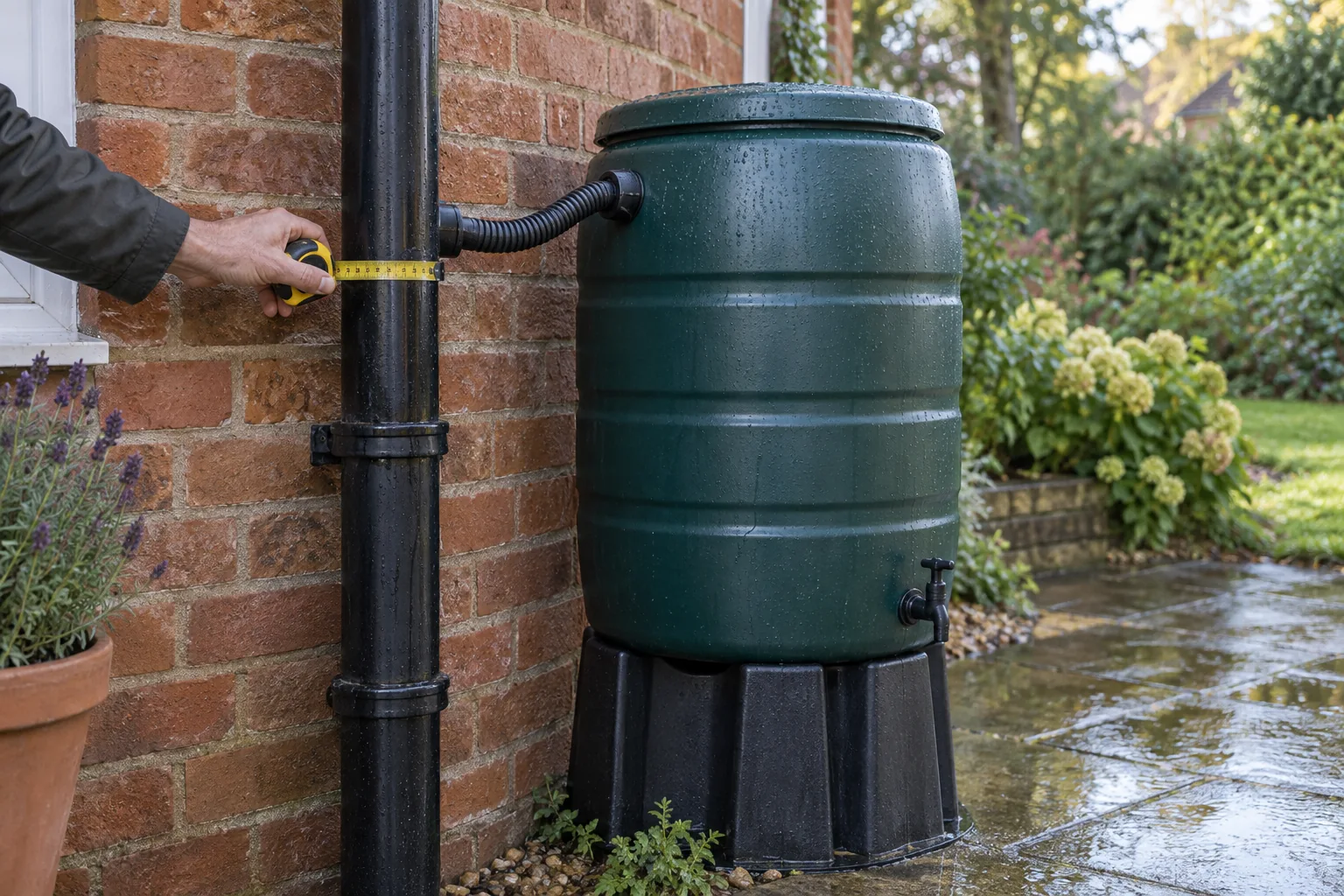
A diverter is a small part of a rainwater system, but it determines whether the butt fills, overflows safely and stays manageable to clean. Start with the downpipe’s shape and measured outside size, then check the route to the butt and whether you need a debris filter.
Simple collection
Harcostar Universal Rain Trap: a compact choice where its stated pipe sizes fit and you do not need an accessible debris basket. Check the Harcostar listing on Amazon UK.
Debris to manage
Gutter Mate with fine mesh: a more involved option when a serviceable filter matters and the downpipe matches its narrower size list. Check the black fine-mesh version on Amazon UK.
These are fit-first examples, not universal recommendations. The product title, included parts and current variant should match the manufacturer’s description before you order. If neither fits the pipe or the planned hose route, change the design rather than forcing a poor connection.
Three measurements that prevent the wrong purchase
- Downpipe outside size and shape. Measure across the outside of the pipe with a tape or callipers, away from a joint or socket. Record whether it is round or square. A nominal name on an old receipt is less useful than the pipe actually fitted.
- Butt inlet height. Place the butt on its intended firm, level stand first. Compare its inlet or water-level mark with the diverter’s installation guidance. The connection should allow the manufacturer’s overflow-return principle to work; a hose that sags or rises awkwardly is a warning to replan.
- Hose route, not just the gap. Measure from the downpipe outlet to the inlet around any bend and allow room for fittings. Both examples here list a 0.5 m supplied hose. GM8 says longer hose is available separately for the Gutter Mate; the Harcostar product page points to extension hose, while also warning that hose sections cannot be joined. Check the exact accessory arrangement with the supplier before cutting the downpipe.
| Check | Harcostar Universal Rain Trap | Gutter Mate fine-mesh bundle |
|---|---|---|
| Round plastic downpipe | 63, 68, 80 or 100 mm | 68, 76 or 80 mm |
| Square downpipe | 61 or 65 mm | 65 or 75 mm |
| Supplied connection hose | 0.5 m, stated 25 mm diameter | 0.5 m standard hose |
| Debris handling | No serviceable filter claimed on the referenced product page | Filter plus fine-mesh insert; plan access for cleaning |
| Important exclusion | GM8 explicitly excludes cast iron | Check the manufacturer’s fit before use on anything outside the stated profiles |
These details come from GM8 Group’s Harcostar product specification and Gutter Mate fine-mesh product specification. GM8 separately qualifies thin-walled 60–61 mm round pipe; do not treat that exception as a blanket fit for all pipe of that nominal size. On square pipe, measure both dimensions if it is not truly square.
Filtered or unfiltered: pay for the work you actually need
A basic trap diverts water and returns excess down the original downpipe once the butt is full. The filter model adds an accessible basket and fine mesh upstream of the tank. That can be valuable beneath trees or where a narrow pump inlet or irrigation filter would otherwise need frequent attention. It also creates a cleaning task: if the basket blocks, collection and drainage can suffer. Choose it only where you can open and service it safely.
Neither option makes roof runoff drinking water. Debris control at the diverter is also different from a correctly sized downstream filter for drip emitters. If a future pump or drip system is planned, treat the inlet filter, butt outlet and irrigation filter as separate choices.
Conceptual layout: follow the selected product’s actual level marks and installation instructions.
Why overflow capacity matters more than a large butt
A simple scale check shows why the return-to-downpipe route must stay clear. A roof section draining 15 m² receives 150 litres from 10 mm of rain in theory: 15 m² × 0.01 m = 0.15 m³. Actual collection will be lower because of losses and the roof/drainage layout, but even part of that event can fill a small butt quickly. A butt’s stated volume is storage, not overflow protection.
Check where the original downpipe sends water during a heavy shower and after the butt is full. Do not let a hose discharge against a wall or paving simply because the container is large. Keep the lid secure and the stand stable; a filled 150-litre butt contains roughly 150 kg of water before the container’s own mass.
A practical pre-cut checklist
- Confirm the selected model’s full pipe-size list, not merely the word “universal”.
- Set the butt and stand in their final positions; check the route and inlet height against the instructions.
- Confirm the actual box includes the hose, butt connector and seals needed for your container; pre-drilled inlets and wall thickness vary.
- Leave access to clean a filter basket if you choose one.
- Follow the manufacturer instructions for cutting and rejoining the downpipe. If the pipe is cast iron, a nonstandard profile, or part of a complex drainage run, get a suitable specialist fitting and installation advice.
- After fitting, observe the first meaningful rain: water should enter the butt and, when full, continue safely down the original drain route.
The buying decision
For a listed plastic downpipe and a straightforward short route, the Harcostar trap is the simpler purchase to compare. Where the listed pipe fits and leaf/debris cleaning is a real requirement, compare the Gutter Mate fine-mesh bundle—then allow for regular basket access. If you plan to use the stored water with a hose, our water-butt pump guide covers pressure and usable storage as the next decision.