
Garden watering · Practical guide
Watering Spring Bulbs in Pots: Planting, Winter and New Shoots
Some links in my articles are affiliate links. I may earn a commission when you buy through them.
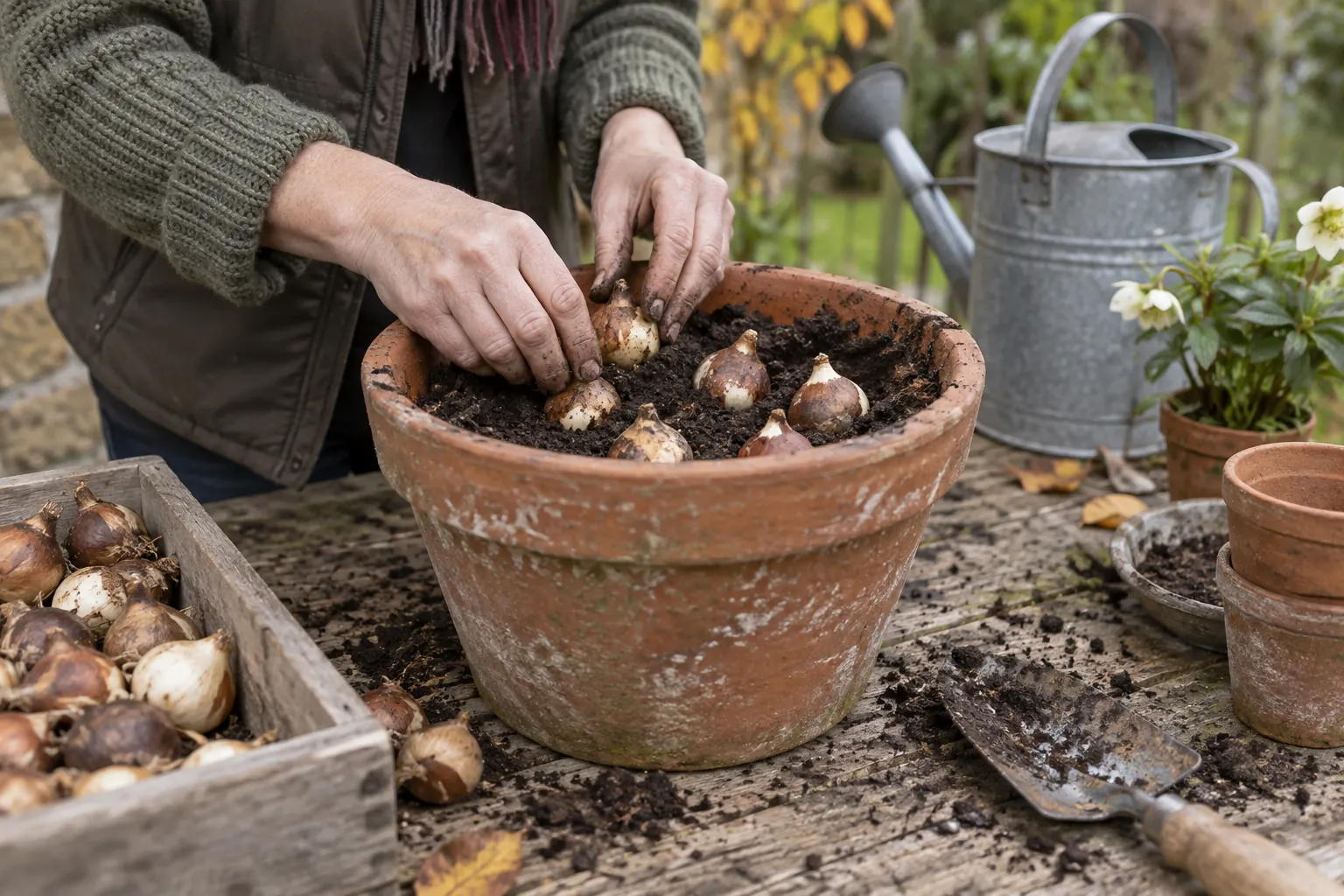
A pot of dormant bulbs should not be treated like a summer basket. It needs an initial settling water, a well-drained place and occasional checks through winter; watering changes once growth resumes. The exact routine depends on weather, compost, pot size and whether rain reaches the container.
The practical answer
Water once after planting, then check below the surface and water only when the compost needs it. A soft spray is useful when a hose reaches the pots without disturbing compost or exposing bulbs.
Useful product route: GARDENA Classic Watering Sprayer
Water once at planting
The RHS bulb planting guide says to water bulbs in containers once after planting, then as needed in active growth, keeping compost moist but not waterlogged. Its container advice includes a free-draining compost-and-grit mix. The RHS pot-planting sequence also waters well to settle compost. Neither instruction means leaving a pot standing in water.
Check that drainage holes are open and raise the container if the site holds water. A decorative outer pot or saucer can collect water unnoticed; empty it after rain. When arranging layers, follow the specific bulb planting depth and spacing guidance rather than using watering to compensate for poor planting.
Check winter pots without soaking them
Rain may keep an exposed pot moist, while one beneath an eave can stay dry. Feel below the top layer before adding water. RHS guidance says winter pots should not dry out completely, yet the compost should not become waterlogged. If a pot feels very heavy and the compost is wet, wait and inspect drainage. If it is dry at root depth, water modestly and let excess leave the pot.
A timer attached to a larger container network can overwater dormant bulbs while another pot needs more. If bulbs share a zone with evergreen or actively growing plants, separate their care or check each container individually. Our irrigation-zones guide explains why differing demand can justify separate control.
Respond to growth in spring
When shoots emerge, growth and warmer weather increase demand. Inspect regularly, water when the compost needs it and avoid a routine that leaves the pot constantly saturated. The RHS pot guide recommends regular watering after shoots appear, with care not to waterlog compost. Later, reduce watering as leaves yellow and bulbs enter dormancy, following the bulb’s specific care instructions.
Use the seasonal container timer guide for a method of changing settings one at a time. A useful note is the date, shelter, compost feel and whether water drained; that record makes next season’s adjustments more reliable than a universal daily schedule.