
Garden watering · Practical guide
Autumn Container Watering: Adjust a Timer Without Drying Out Pots
Some links in my articles are affiliate links. I may earn a commission when you buy through them.
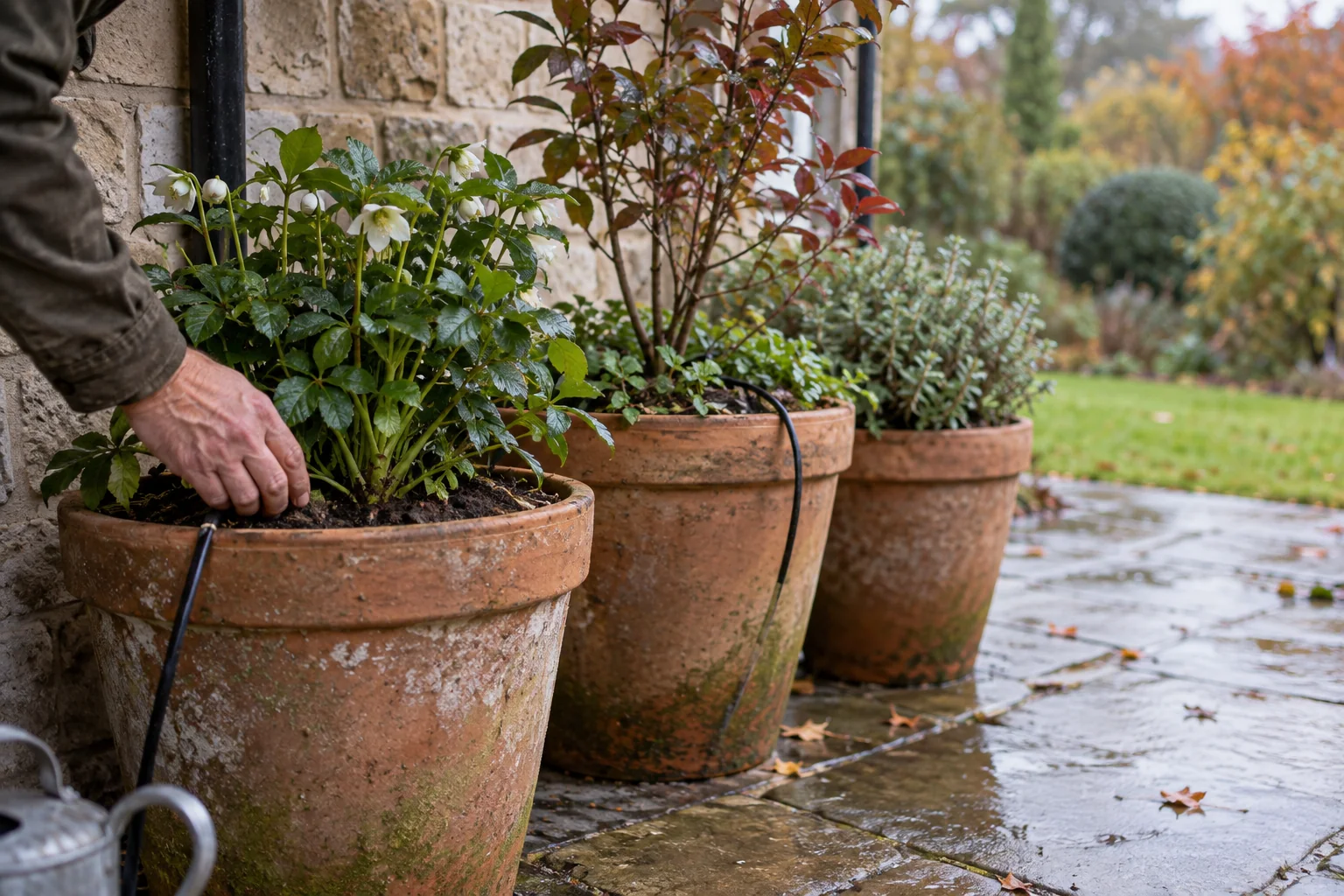
When summer ends, review automatic watering rather than switching every pot off on the same date. A sheltered evergreen can still dry out while an exposed container remains wet. The useful decision is whether each group needs watering now, not whether the calendar says September.
The practical answer
Reduce or pause a timer from observations in each pot group, not from the date. If you still need automatic cycles, choose a controller whose start method and programme suit the containers and keep checking sheltered pots separately.
Useful product route: Hozelock Sensor Controller Plus
Group pots by exposure and need
Make a quick inventory of the containers on your timer. Record shelter, pot size, plant type and whether each plant is still actively growing. Pots under eaves deserve separate checks because rain reaching the patio may miss their compost.
| Group | What to inspect | Schedule decision |
|---|---|---|
| Sheltered, leafy plants | Compost moisture despite rainfall nearby | Keep watering available if needed |
| Rain-exposed containers | Moisture and free drainage | Pause unnecessary automatic cycles |
| Finished seasonal display | Whether plants have been removed | Disconnect or close unused outlets properly |
| Plants moved for protection | New exposure and tube route | Recheck delivery and schedule |
These groups are a planning aid, not plant-specific instructions. Consult care guidance for sensitive plants. Our container drip setup guide covers the physical layout.
Use the compost check to change the schedule
The RHS container maintenance guide warns against overwatering and recommends checking moisture below the surface even after rain. Sheltered evergreens can still need watering in winter, while dormant deciduous plants usually need less.
Before the next programmed cycle, inspect representative pots below the surface with minimal root disturbance. Compare the smallest exposed pot with a large sheltered one. Note whether drainage is clear and whether a saucer holds standing water. If one group is consistently wet while another becomes dry, sharing a schedule is the problem to solve.
Do not use a fixed “halve the summer setting” rule. Save the existing settings, adjust one group at a time, then inspect again before its next cycle. If a pot remains sufficiently moist, skipping a cycle may make more sense than running a brief watering merely because the timer is set.
Do not let rainfall elsewhere decide for sheltered pots
A rain pause can be useful, but it responds to rain at the sensor or data source. It cannot demonstrate that compost beneath an overhang is wet. Check the sheltered group independently and use separate controls if its needs differ substantially from the rest. Our timer comparison helps assess pause functions and scheduling options.
Review the plumbing when plants move
Moving containers closer to a wall can kink a branch or pull a connector loose. Run a supervised check after rearranging them. Close redundant branches with the correct fittings rather than leaving an open outlet watering an empty space. Inspect the other outlets again because changing the arrangement can alter delivery.
Use our leak guide if a fitting has been disturbed. A quick catch test provides a delivery check, alongside compost observations.
Separate seasonal adjustment from frost storage
Reducing watering is different from protecting equipment against freezing. Follow the controller and component manuals for frost precautions and storage. The RHS advises avoiding container watering when frost is forecast and removing saucers in winter. Our winter preparation guide covers the equipment review. Keep a hand-watering plan for any sheltered plants that still need care after the automatic system is removed.
Sources checked 18 September 2026. Planning and inspection sequences are Mersey Direct editorial guidance, not claims of physical product testing.