
Garden watering · Practical guide
Watering a Newly Planted Hedge: Rootball Checks and Drip Layout
Some links in my articles are affiliate links. I may earn a commission when you buy through them.
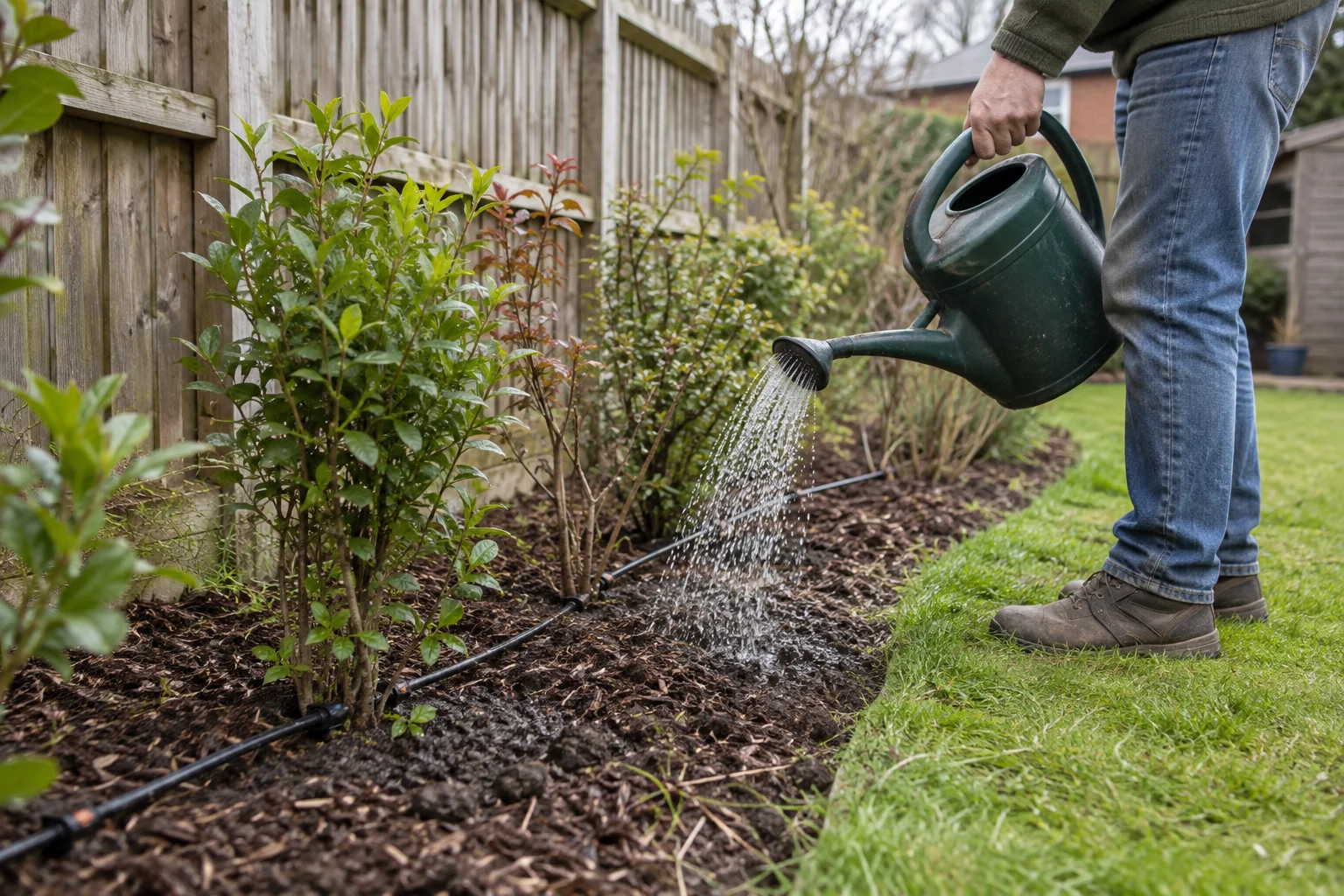
A new hedge needs an establishment plan as well as a planting plan. A long irrigation line is convenient, but its presence does not prove that every young plant receives useful water. Check rootball moisture, the surrounding soil and coverage along the whole row.
The practical answer
For a continuous hedge row, compare a porous hose with a supply-line-and-dripper layout. Whichever route you choose, test moisture at several rootballs before relying on one runtime for the whole hedge.
Useful product route: Hozelock 25 m porous hose, Hozelock 13 mm supply hose or Hozelock pressure-compensating drippers
Keep establishment separate from routine garden watering
The RHS hedge planting guide advises keeping new hedges well watered for the first two years, watering during dry spells without waterlogging. It recommends early autumn for evergreen and semi-evergreen hedges, and planting deciduous hedges from leaf fall. Delay planting when the ground is frozen or waterlogged.
This is not a recommendation to run a daily timer for two years. Plant size, root supply, soil, weather and drainage determine the need. A dormant bare-root whip and a large leafy pot-grown plant should not automatically receive identical schedules.
Map the plants before choosing emitters
Sketch the row with each plant position, water source and access route. Note changes in level and any section beside a wall or beneath tree cover. Mark the actual rootball sizes rather than treating the entire row as a narrow strip with identical plants.
For individual drippers, plan outlet positions to wet the relevant root area. For dripline with fixed outlet spacing, compare the spacing with the plant positions and manufacturer’s layout guidance. A neat straight pipe may leave outlets between small rootballs; inspect the wetting pattern rather than assuming that proximity is enough.
Use our inline and endline guide to understand outlet arrangements. Match the supply, filter and pressure requirements using the inlet buying guide.
Check rootball and soil separately
After a supervised watering, gently inspect beside representative plants. The RHS watering advice recommends slow watering around new trees and shrubs so moisture reaches the root area. Rain shadows can leave plants short of water even after rainfall.
A moist patch of surrounding soil does not confirm that a pot-grown rootball has been wetted. Conversely, repeatedly soaking one compact area can leave it too wet. Compare the original rootball medium and neighbouring soil with minimal disturbance. If they behave differently, reconsider delivery position and check drainage before increasing the timer.
For a longer row, sample the beginning, middle and end, plus any noticeably different section. Our catch-test guide helps separate poor delivery from poor soil wetting. It does not prescribe the volume a particular hedge needs.
Use mulch without losing access
Keep the row weed-free so young plants are not competing with weeds. Apply suitable mulch clear of stems and keep connections and the line end reachable. Mark the pipe route before covering it, especially if more plants may be added later.
Inspect through dry spells and after changes in weather. Record the watering setting and your moisture observations so adjustments have a reason. A wilted plant is not automatically thirsty: check the soil before adding water. Persistent waterlogging or plant decline calls for horticultural advice and drainage assessment.
A useful handover note
If someone else will care for the hedge, show them which soil areas to check, how to pause the timer, and where the supply closes. Include the locations of vulnerable sections and instructions to report uneven watering. Avoid a single instruction such as “run it every day” that ignores changing conditions.
Sources checked 18 September 2026. Planning and inspection sequences are Mersey Direct editorial guidance, not claims of physical product testing.