
Garden watering · Practical guide
Rain Sensor or Soil Moisture Sensor? Check Before Automating Watering
Some links in my articles are affiliate links. I may earn a commission when you buy through them.
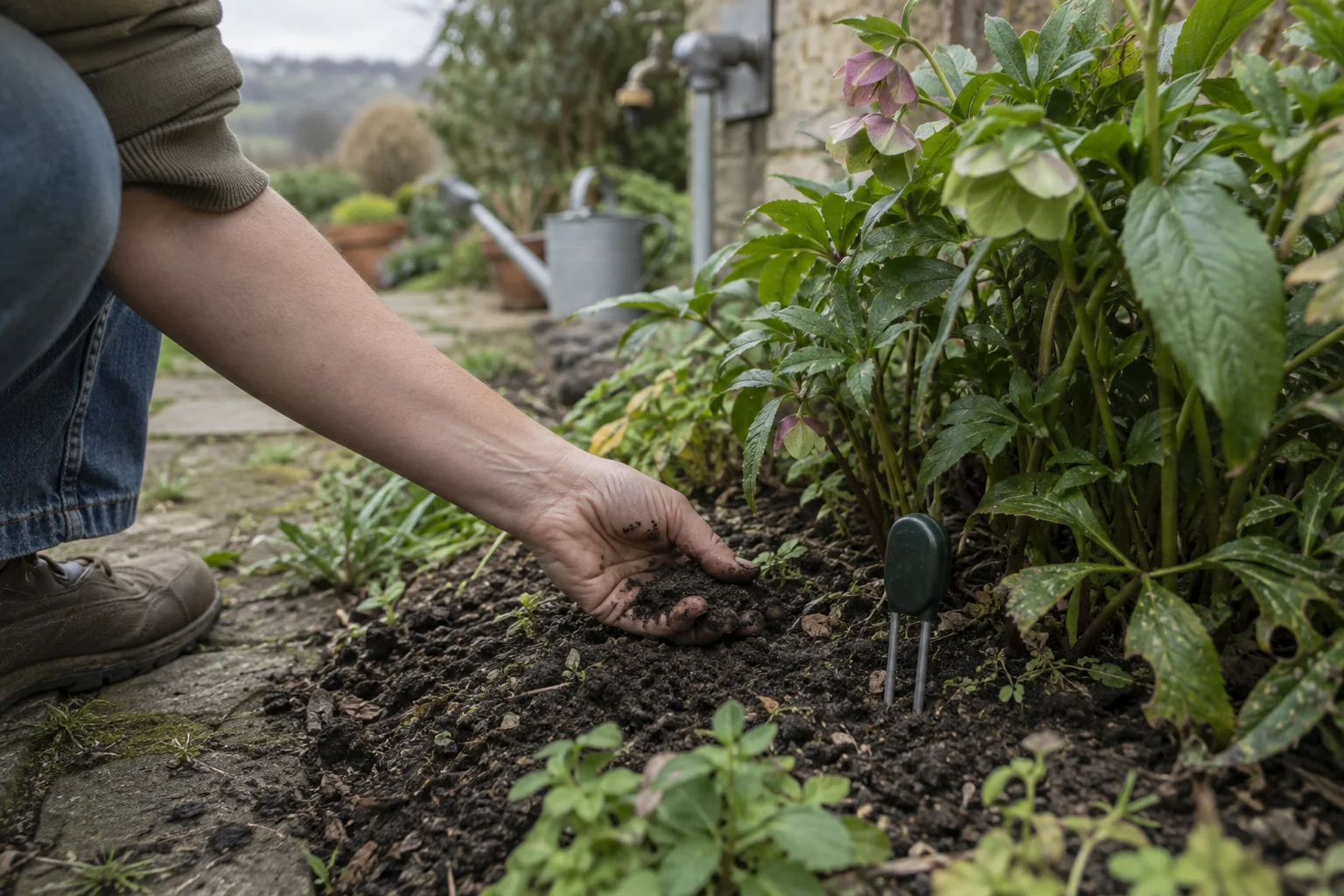
A sensor can prevent unnecessary watering, but only if it answers the right question and works with your controller. A rain sensor responds to rainfall at its location. A soil moisture sensor responds to conditions around its probe. Neither automatically represents every plant in the garden.
The practical answer
Choose a rain sensor when rainfall at one point is the event you need to detect. Choose a soil-moisture sensor when the probe location is representative and the exact controller supports it. One sensor should not control unlike zones blindly.
Useful product route: GARDENA Soil Moisture Sensor 01867-20
Choose the question you need answered
A border exposed to rain and a patio pot beneath an overhang can need different treatment on the same wet day. If one sensor blocks the entire system, the sheltered pot may miss a needed watering. Separate control may be more useful than adding a sensor to a shared schedule. Read our irrigation zone guide before buying.
Do not buy by brand name alone
Write down the full controller model and article number, then check its manual against the exact sensor. Confirm the connection type, supported sensor behaviour, power supply, cable length or wireless requirements, and whether a gateway or app is required.
For example, Hunter’s Hydrawise documentation describes support for open/closed-contact rain and soil sensors, with configuration needed in the app. That is guidance for those supported systems, not permission to connect the same device to a battery tap timer.
The GARDENA 1188-20 product page describes a cabled sensor that can skip unnecessary watering when soil is sufficiently moist. GARDENA’s UK smart-control support page separately specifies the smart sensor for smart Dual Water Control. Similar names do not establish cross-compatibility. Obtain confirmation for your exact pair if the documents are unclear.
Place it where the reading has meaning
Follow the sensor’s installation instructions for siting and depth. A rain sensor hidden under a roof cannot represent rainfall in an open border. A soil probe in one unusually wet corner cannot reliably describe a drier bed. Avoid choosing a location simply because it makes the cable easy to hide.
Compare the proposed location with other plants on the same zone. If pots differ substantially in size, compost, shelter or plant demand, one probe may be a poor basis for all of them. A sensor does not remove the need to inspect the places it does not measure.
Test the blocked cycle as well as normal watering
- Record a working baseline schedule and confirm the outlets deliver normally.
- Install and configure the sensor using its manual.
- Use the manufacturer’s test procedure to trigger the sensor condition.
- Check which zones are blocked and whether manual watering bypasses the sensor.
- Verify the return to normal operation once the test condition clears.
Check these behaviours before leaving home. Some manual commands behave differently from scheduled cycles, and a displayed sensor reading does not prove that the water valve obeyed it. Use our holiday checklist for the wider unattended-watering checks.
When a simpler control is enough
If you can inspect a small collection of pots easily, a timer with a clear pause function may meet your needs without extra devices. Start with our timer buying guide. Judge a sensor upgrade by the decision it improves, compatibility and the checks you can maintain. No universal water-saving percentage or unattended-watering guarantee is implied.
Sources checked 18 September 2026. Planning and inspection sequences are Mersey Direct editorial guidance, not claims of physical product testing.