
Garden watering · Practical guide
Wilting After Rain? Check for Waterlogging Before Running Irrigation
Some links in my articles are affiliate links. I may earn a commission when you buy through them.
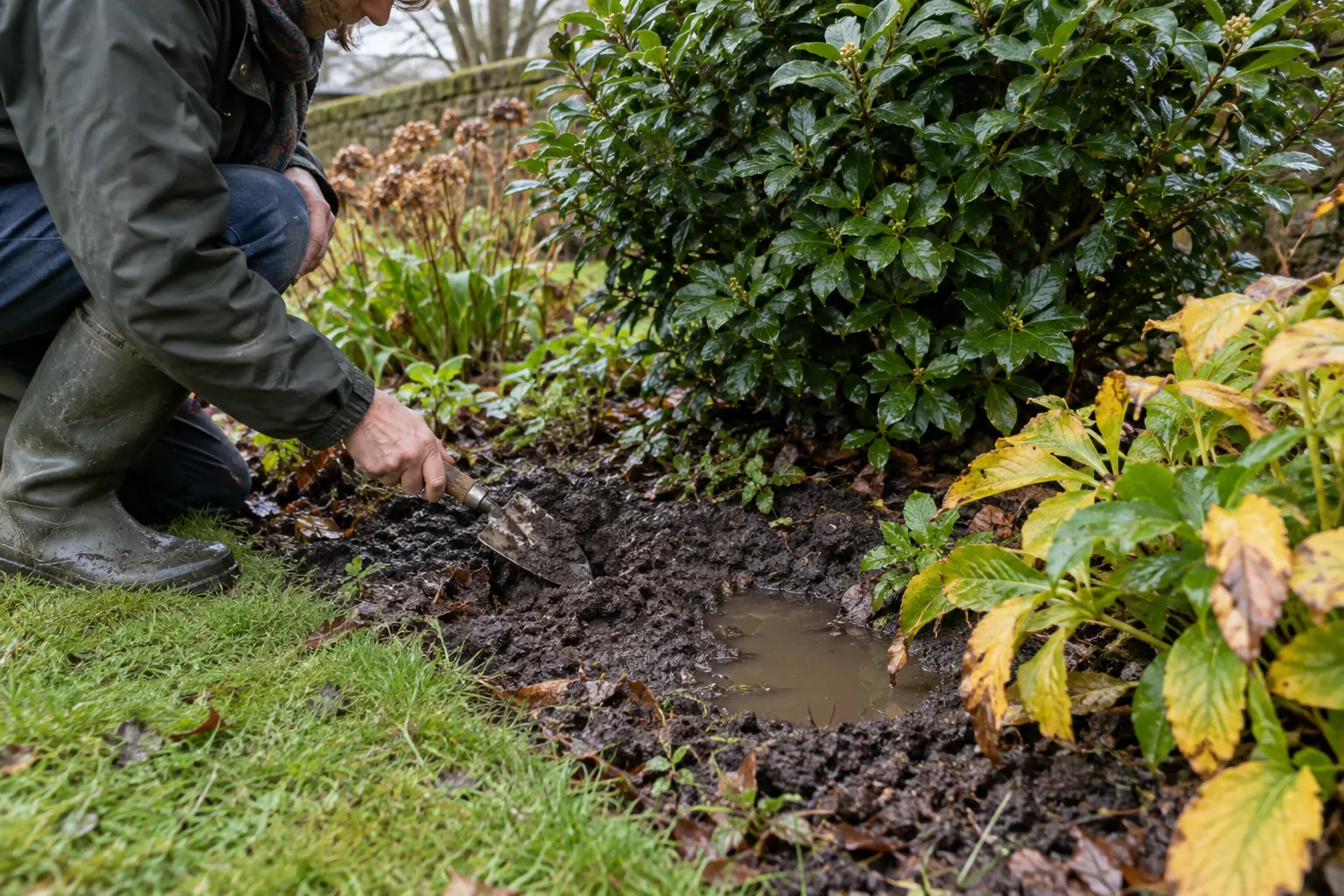
Wilting is not proof that a plant needs another watering cycle. Roots in saturated soil can struggle to absorb water because the air spaces have filled. If leaves droop after prolonged rain, investigate the soil before extending a timer.
The practical answer
Pause automatic watering while the root zone remains saturated. If you want a sensor to inhibit compatible automatic watering, verify the exact controller connection first; a sensor will not repair poor drainage or diagnose root damage.
Useful product route: GARDENA Soil Moisture Sensor 01867-20
Start with the ground, not the leaves
The RHS waterlogging guide explains that prolonged saturation reduces oxygen for roots. Yellowing, stunted growth and root damage are possible, but its symptoms can resemble drought. A short-lived puddle after a downpour is different from soil that stays wet for days. Gently inspect a representative spot beside the root area and a comparison spot on higher ground, avoiding unnecessary damage to roots.
Note whether the soil is moist, saturated or dry at depth, and whether water is still standing after the rest of the border has drained. If you can safely examine a small root sample, dark decaying roots and a sour smell suggest a more serious issue; no single leaf symptom establishes a diagnosis.
Separate three sources of water
Record recent rain, manual watering and automatic cycles. A rain sensor may stop a controller under its own conditions but cannot diagnose waterlogged soil at every root zone; our sensor comparison explains that distinction. Check the controller history and any manual override. Then look for a leaking fitting or a dripper that continues to discharge after shutoff; our leak guide helps distinguish a loose connection from another cause.
Do not assume a wet patch is a system fault. Runoff from paving, compacted soil, a low point and poor drainage can collect water without irrigation. The RHS notes that hard landscaping can concentrate runoff into a smaller planted area.
What to change
If the root area remains saturated, pause supplementary watering for that zone, keep people off wet soil to avoid compaction and investigate drainage. Long-term measures depend on the site and may require different planting or drainage work. If the soil is actually dry at root depth, check emitter output and wetted area before increasing duration. Our slope guide separates runoff and drainage after shutdown from uneven flow.
After any change, revisit the same observation points. Keep a short record of rain, cycle times, puddle duration and soil feel. That prevents a well-meant adjustment from making the saturated area worse.