
IRRIGATION / PRACTICAL GUIDES
Do You Need a Pressure Regulator for Drip Irrigation?
By James Thompson
Some links in my articles are affiliate links. I may earn a commission when you buy through them.
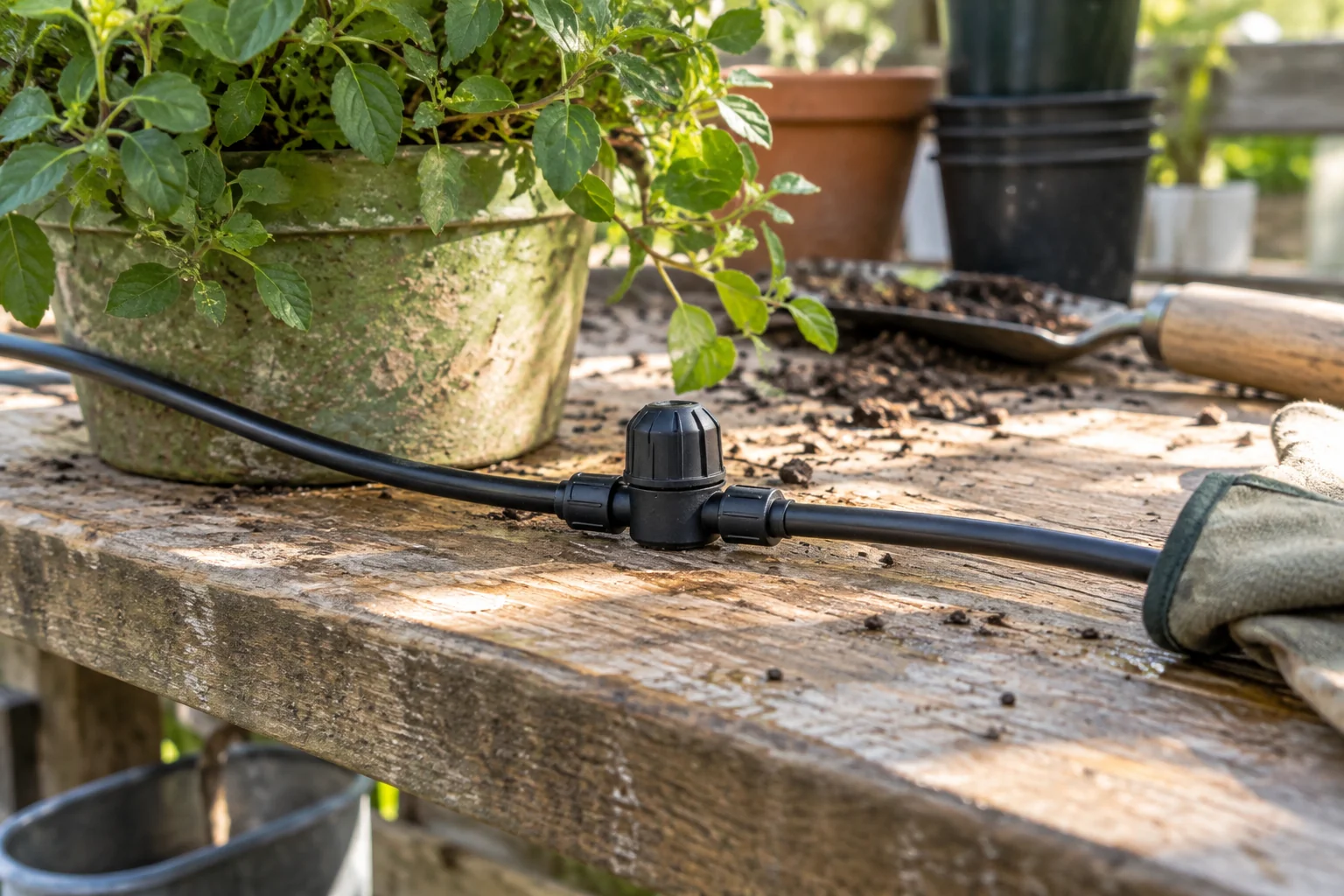
A pressure regulator reduces incoming water pressure to a level suited to the irrigation components downstream. For a tap-fed drip system, choose the regulator specified for your kit or component range. A powerful garden tap does not mean that small fittings and drippers should receive its full pressure.
The practical answer
Use the regulator specified for the chosen drip range; it reduces pressure but does not filter debris or control watering times unless the product explicitly combines those jobs. For GARDENA Micro-Drip, compare the Master Unit rather than a generic regulator.
Useful product route: GARDENA Master Unit 1000 listings
What does a regulator actually do?
Think of it as the pressure-setting part of the system inlet. It serves a different purpose from a timer, which controls when water runs, and a filter, which intercepts particles. Some starter units combine regulation and filtration in one housing.
For example, GARDENA specifies approximately 1.5 bar downstream pressure for its Master Unit 1000. That is an example for a particular system, rather than a universal setting for every drip product. Read the instructions for the exact regulator, pipe and emitters you intend to connect.
Pressure must suit both sides
Five specifications to check before buying
- Outlet pressure: it must suit your emitters and tubing.
- Permitted inlet pressure: the supply must fall within the regulator’s operating range.
- Flow range: check both minimum and maximum flow where stated.
- Connections: confirm threads, adapters and tube dimensions.
- Installation position: follow the specified orientation and order of components.
Write these on your shopping list alongside the product references. Similar-looking units can have different operating requirements. Our pipe sizes and fittings guide explains another common source of mismatch.
Can you just turn the tap down?
Partially closing a tap restricts flow, but it does not provide the same controlled outlet-pressure function as a suitable regulator. Pressure can also change when other outlets are used. Treat the tap position as an operating adjustment only where your manufacturer recommends it.
A regulator cannot fix every weak dripper
A regulator reduces pressure; it does not boost a weak supply. If the far end waters poorly, check for leaks, kinks, a dirty filter, an overextended branch and excessive combined demand before buying another unit. Compare the first and last emitters during the same test run.
A useful commissioning record includes the regulator model, emitter count, pipe lengths and the result of that test. Keep it with the instructions so that future extensions can be checked against the original layout.
Does it replace a filter?
Only if filtration is actually included, and even then the filter specification must suit the system and water source. See when a drip irrigation filter is needed before assuming one inlet accessory covers both jobs.
Choose the inlet equipment first, then assemble a compatible downstream system. Avoid buying a collection of inexpensive fittings and trying to solve their pressure requirements afterwards.
Product examples on Amazon
Compare these examples with your chosen manufacturer’s specifications before ordering. These are individual product examples, not a confirmed compatible bundle.
Hozelock 13 mm supply hose — view on Amazon
Compare the supply-pipe specification with the fittings you plan to use.Hozelock in-line pressure-compensating drippers — view on Amazon
Check the connection size, rated flow and permitted pressure for your system.
Explore all irrigation guides →
Sources
Choosing inlet equipment
Compare filters and regulators against your system requirements →